


2026 Statehouse Snapshot: Week 9
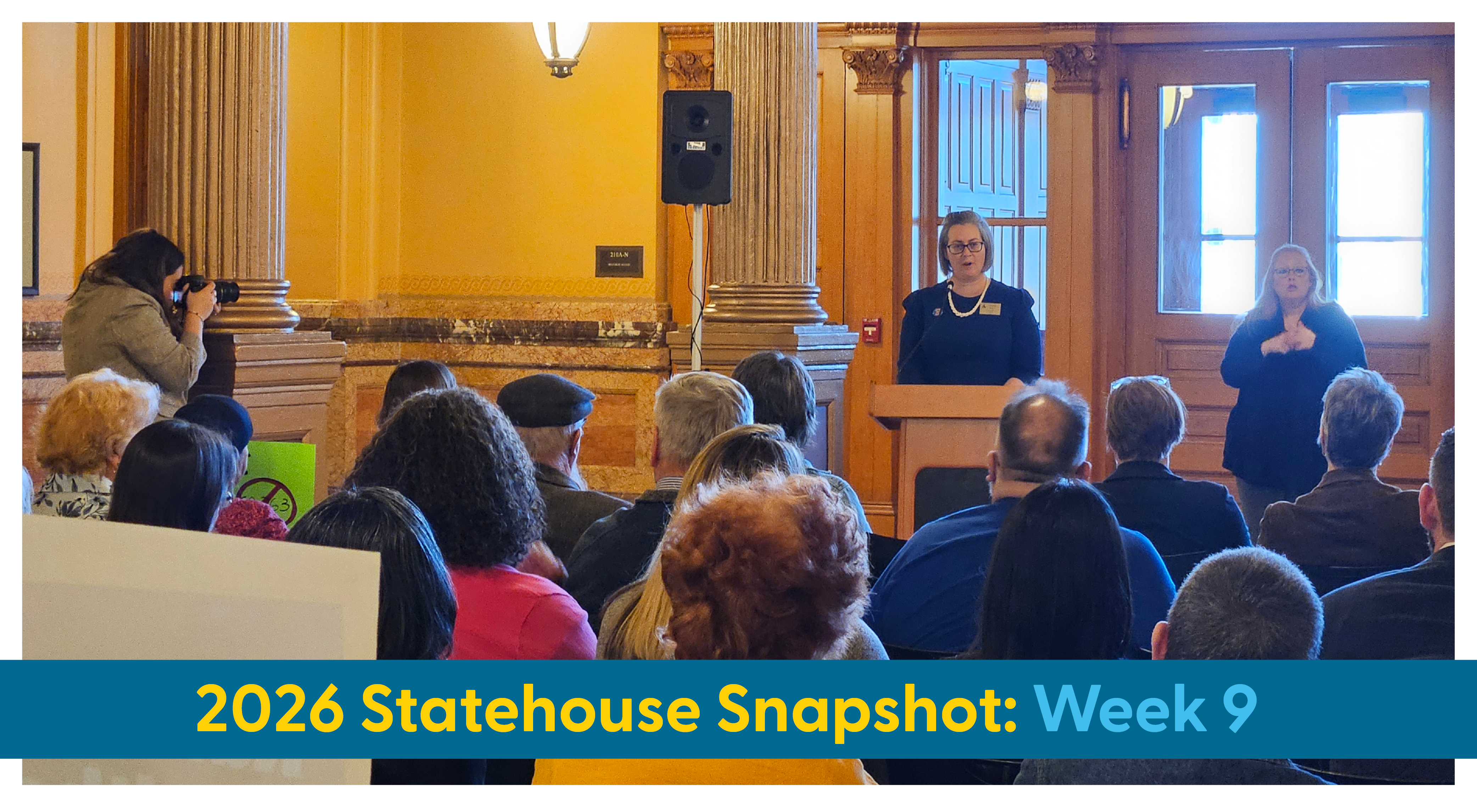
Photo: KAC Senior Policy Advisor Heather Braum delivers remarks at the 2026 Health Care for Rally on March 12, 2026.
Kansas Action for Children | March 13, 2026
Want to receive this weekly recap as soon as it's released? Sign up for our emails here.
Two Weeks Left of Session, with Lots Left to Accomplish
With only a few weeks remaining in the legislative session, time is running out for lawmakers to take meaningful action for Kansas families. Committees complete their work this coming Tuesday and lawmakers will spend all day on the floor Wednesday through Friday. The window of opportunity for several priorities is closing fast.
The action that lies ahead in the next 14 days will be telling. We hope that the rest of the 2026 session will have a greater focus on smart, sensible policies that will help struggling families – not vilify those who are falling behind in a broken system. This session already, lawmakers have shown that they can work together toward a common goal, and they can continue to work through divisive narratives for the good of Kansas.
There’s still time for lawmakers to focus on practical solutions families are counting on.
As we head into the final stretch, we will continue to monitor legislative activity at the Statehouse and keep you informed on the issues that matter most to Kansas families. We encourage you to stay engaged by contacting your legislators, sharing your story, and reminding them that the decisions made in these final days will have a real impact on real people across our state.
Advocates Continue to Elevate Concerns about SB 363
Dozens of Kansans showed up for the 2026 Rally for Health Care to show support for Medicaid expansion and to stand against SB 363. Hosted by the Alliance for a Healthy Kansas, several advocates spoke to the harms this bill would cause and even shared personal stories of the challenges Kansans face in accessing affordable health care.
The timing for the rally could not have been better, as the House Committee on Welfare Reform held the bill’s final legislative hearing following the rally.
Advocates filled the room to hear testimony about the impacts of the bill. Only one outside Kansas organization spoke in favor of the bill, while 14 opponents (including KAC) shared how SB 363 would hurt low-income Kansans who rely on Medicaid and SNAP benefits to lead healthy lives. We expect the Committee to take up the bill next Tuesday before all committee work is finished for the year. As they deliberate, we hope the Committee will remember the personal stories and expertise shared about the numerous challenges applicants and enrollees already must navigate to keep critical benefits.

In other health news, the House unanimously passed the CHIP eligibility fix bill (SB 271) on the floor, getting the policy the closest it's ever been since we began advocating about it nearly five years ago. The last step in the legislative process – the Senate agreeing to the House’s amended version of the bill – could happen early next week before being sent to the Governor’s desk for approval. With the measure so close to the finish line, we’re excited to see it likely pass unanimously, showing there are unique opportunities for lawmakers to work together to make life better for Kansas kids.
Cell Phone Bill Passed, Awaiting Governor's Action
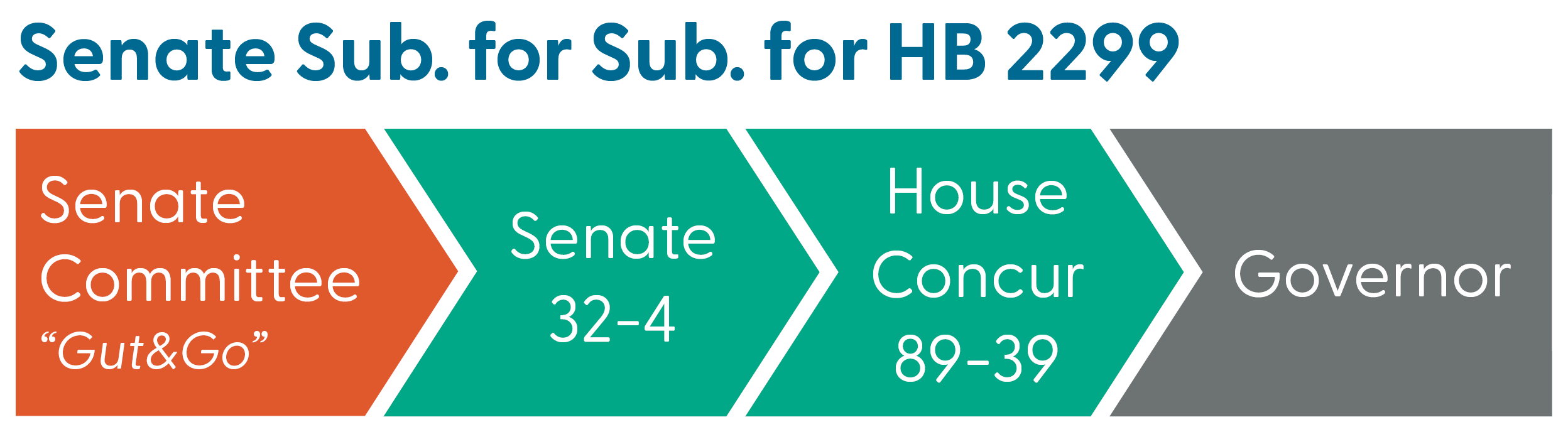
After months of debate and legislative action, the bill (Senate Sub. for Sub. for HB 2299) restricting cell phones in K-12 schools passed the Legislature. As of today, it is now in the Governor’s hands. She has 10 days to sign, let the bill become law without her signature, or veto the measure. We remain hopeful that the Governor will sign the bill, as she revealed the issue as a priority during her State of the State address in January.
While we recognize there are different thoughts on this legislation and what the impact may be, we continue to believe this policy will allow all Kansas students equal opportunity to learn and focus at school, regardless of their school district. Research consistently shows that reducing device distractions during the school day improves academic performance, supports student mental health, and fosters more engaged classroom environments.
We look forward to the Governor’s action and will continue to advocate for policies that help every Kansas student learn and thrive.
Progress on Housing, School Meals
While several good housing bills weren’t seeing much action in recent weeks, the action is starting to pick back up. Just this morning, the Senate Commerce Committee held a hearing on HB 2357, a bill we’ve been following since 2025. It would allow for the expungement of eviction records three years after an eviction occurs and would require courts to consider mediation when an eviction is filed. Both of these provisions would help reduce instances of childhood housing insecurity.
A hearing was held for this bill during the 2025 session but then no further action occurred. Advocates worked hard between sessions to keep the discussion alive, and that hard work seems to be paying off. We’re hopeful the bill will keep moving through the legislative process, and that the Senate will pass it with wide support like the House did last month. It has been exciting to be part of a bipartisan effort to provide real relief to struggling Kansas families.
 There was also positive news on school lunches this week. The discussion on SB 387 – the bill impacting at-risk funding in public schools and prohibiting the usage of the Community Eligibility Provision (CEP) without legislative approval – has been happening for weeks. The House Committee on Education took further action on the bill this week, ultimately removing the CEP provision entirely. As around 59,000 Kansas students accessed free schools meals in the 2024-2025 school year because of the CEP program, allowing schools to continue opting in without legislative meddling is a reason to celebrate.
Unfortunately, the bill still includes the requirement that schools confirm eligibility for students who may count toward the at-risk funding calculation. Because of the likely loss of funding to schools, we’re hopeful the House won’t take it up. But it’s encouraging to see bipartisan interest in keeping kids fed at school. While the number of days left in session are quickly dwindling, opportunities still remain for lawmakers to expand access to school meals.
Bill Heard Simplifying Child Care Subsidy Payments
SB 513, a bill simplifying how child care subsidy payments are paid to providers, was quickly introduced, heard, and worked by the Senate Committee on Ways and Means. The bill would require the Department for Children and Families and the Office of Early Childhood to develop a payment system for the Kansas Child Care Subsidy Program to allow child care subsidy payments be sent directly to child care providers instead of placed on an EBT card provided to parents, who then pay providers. The bill received overwhelming support, with seven proponents testifying that direct-to-provider payments would result in increased participation in the program by increasing ease and reducing confusion for providers. No opponent testimony was submitted for the bill.
While some of the committee members questioned the implementation of the program as a whole, they seemed to view this bill as a move in the direction of increased transparency and a reduction in third party fees. Ultimately, the bill passed out of SWAM with a minor amendment to change the bill’s effective date. We are hopeful that this commonsense bill will continue to move forward with wide support when the full Senate considers it this coming Monday.
Tax Credits for Child Care; Property Tax Defeats
 Amidst furious committee activity, the Senate Committee on Assessment and Taxation began the week by hearing testimony on SB 521, which would simplify and enhance the Child Day Care Assistance Tax Credit. This credit, meant to be an incentive for employers to help provide child care to employees, is often confusing and heavily underutilized in its current form.
SB 521 streamlines criteria clearer and standardizes the credit utilization parameters. Currently, employers can qualify in five different ways and utilize the credit in at least as many.
The bill was amended to remove eligibility to employers who contribute to third-party organizations that help improve the availability of child care and to make the credit non-refundable. It’s unclear what these amendments would mean for business utilization, but this credit desperately needs cleaned up so that employers have more clarity on how they can support employees who have young children.
Beyond the child day care tax credit, the Senate Tax Committee and the House chamber acted on several measures relating to property taxes.
While Senate Tax heard several proposals to upend property taxes (including SB 488, which would eliminate property taxes and increase sales taxes), the House decisively rejected SCR 1616. This was the Senate’s plan to roll property valuations back to 2022 levels plus 3% and cap future growth at 3% per year. In response, the Senate pulled the House property tax plan, Senate Sub. for HB 2745, from the chamber’s debate agenda and sent it back to committee.
With the current stalemate, it’s unclear what the path forward for property tax relief is, but there is sure to be discussions between the two chambers in the few weeks left of the legislative session.
What to Expect in Week 10

There isn't much time left for the Legislature to act on policies for Kansas families – but if experience tells us anything, it’s that anything is possible if the Legislature wants something badly enough.
The next two legislative days will be spent to wrap up committee work before they start debating what is likely to be a long list of bills. Right now, we anticipate committees working on:
-
HB 2357, allowing for eviction records to be expunged after certain requirements are met, in the Senate Committee on Commerce on Monday.
- SB 363, adding many paperwork burdens to public assistance programs, in the House Committee on Welfare Reform on Tuesday.
You can always visit the Legislature’s website and look up the bills you care about to see where they’re at in the process. Expect quick action on items in the coming weeks, so reach out to your lawmakers now if there is a bill you are particularly interested in.
Share

