


FEDERAL POLICY CASCADES DOWN TO KANSAS COMMUNITIES. For years, Kansas Action for Children has maintained a strong Statehouse presence, serving as the eyes and ears for young Kansans who are too often overlooked by lawmakers. When the Legislature is in the Statehouse, we’re there – tracking legislation that might impact health, education, and economic outcomes for kids, families, and low-income Kansans. We follow every step of the budget process and track how lawmakers will generate the revenue needed to fund the essential services Kansans count on.
We provide policymakers with the data, analysis, and policy recommendations they need to make the best possible decisions. And we build and maintain relationships with lawmakers across the political spectrum to ensure children’s needs are heard.
While we’ve always paid attention to the state-federal connection, today’s challenges demand deeper federal engagement. We are taking what we do best at the state level and translating these skillsets to a deeper engagement with federal advocacy.
Why Federal Advocacy Matters
Monitoring state and federal politics is far down on the list of priorities for most people, especially minutiae related to state and federal funding and programs for low-income families. By the time the average voter starts paying attention, they have likely already been impacted.
Our aim is to inform policies before that impact is felt within Kansas communities. We do this by educating the public on what exactly their elected officials are doing, as well as helping elected officials understand the realities of the Kansans they’re representing.
The State-Federal Connection
Many Kansas programs rely on federal support – like the Supplemental Nutrition Assistance Program (SNAP), child care subsidies, Medicaid and the Children’s Health Insurance Program, and Head Start. Few public services for children operate without some level of federal funding. Often, states must match, share costs, or maintain some level of effort with local funding. Without the federal backbone support, most of these programs would cease to exist.
The significant changes being made in 2025 at the federal level are creating a great deal of uncertainty about the future prospects of many programs Kansans rely on to help them make ends meet. Bills like Congress’ H.R. 1 (the “One Big, Beautiful Bill” Act passed in July 2025) have initiated a cascade of funding and eligibility changes that will affect Kansans for years to come.
READ: Congress’ ‘Beautiful’ Bill Unleashes a Cascade of Harmful Changes upon Kansas Families
KAC will continue to monitor these developments, advocate for better policies, and work to ensure federal programs remain a reliable support for Kansas families.
Federal funds make up the second largest funding source for the FY 2026 state budget, second only to the state general fund, funding approximately 27% of the state’s expenditures.
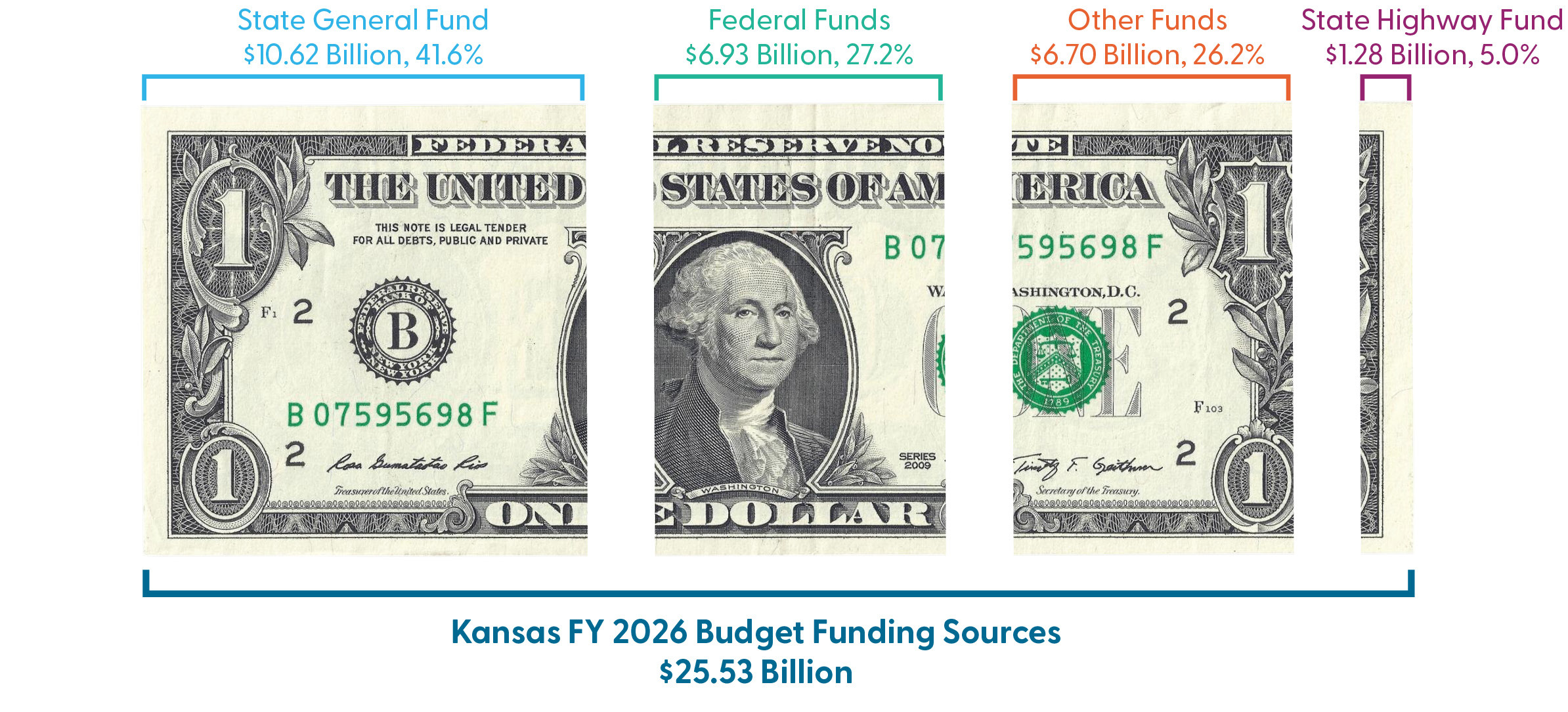
When it comes to the programs that support the most vulnerable Kansans, federal dollars often make up a much greater percentage of the funding. For example, in FY 2026, 65% of Kansas Medicaid assistance was funded with federal funds. Other programs, such as Special Supplemental Nutrition Program for Women, Infants, and Children (WIC) and Temporary Aid for Needy Families Cash Assistance, are administered by the state but funded primarily with federal funds.
Local and state policies make some of the biggest impacts on Kansas kids’ lives. But if federal funding and program supports are in jeopardy, progress at the local level will be significantly strained. A generation of children is relying on policymakers at all levels of government to plan and invest in their futures.
Policy Solutions
- Advocate for Congress to lead by example by supporting broad-based policies that benefit our youngest Americans, such as child care, health insurance, economic security programs, and tax credits.
- Ensure Kansas maximizes its federal funding opportunities by prioritizing the necessary state contributions.
- Reduce the federal debt by passing laws that require the wealthiest Americans and businesses to pay their fair share.
Share
