


2026 Statehouse Snapshot: Week 5
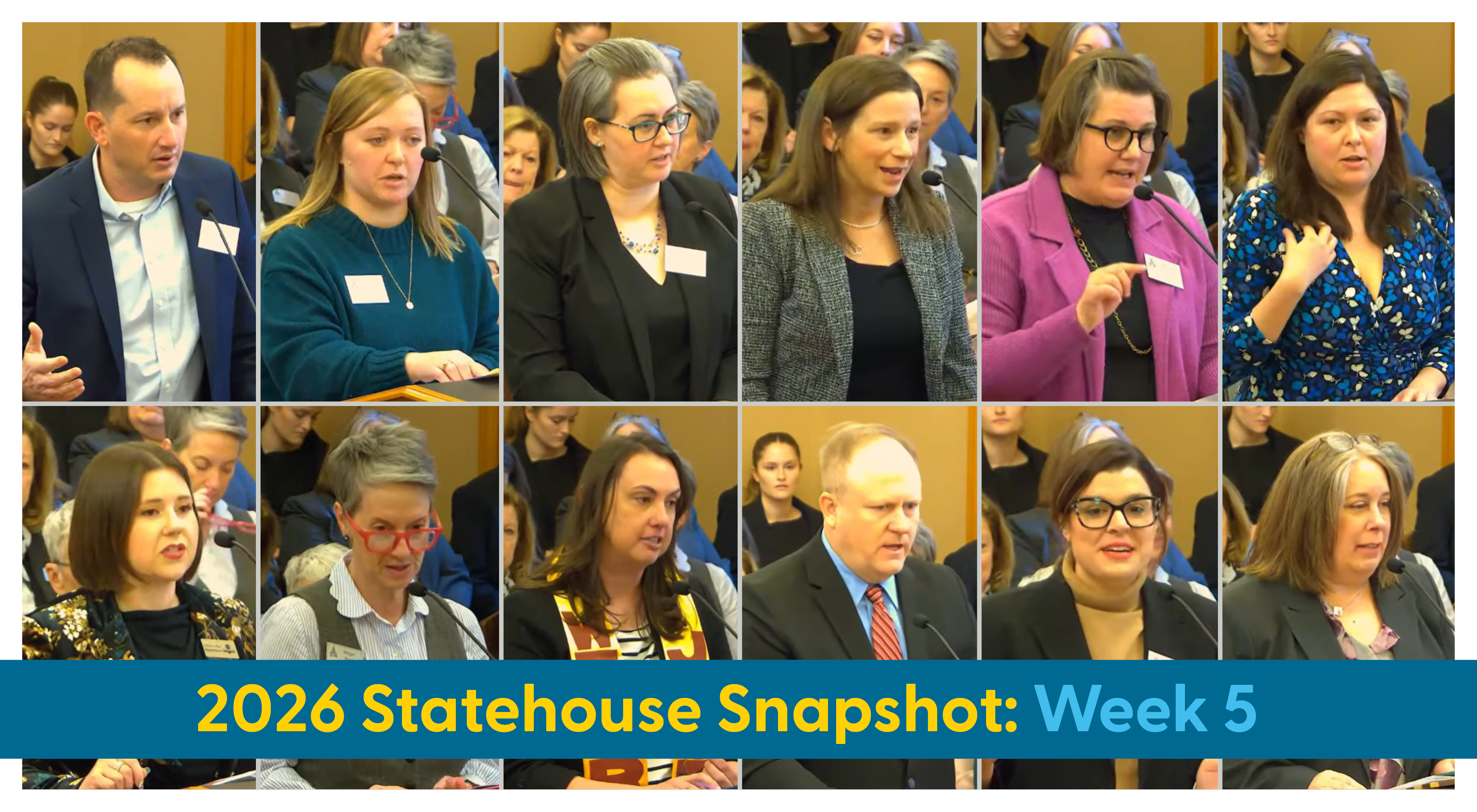
Photo: Advocates gave testimony on SB 363 this week, showing the Committee broad opposition to burdensome public assistance changes. Photos taken from screenshots of the Kansas Legislature's Youtube live stream.
Kansas Action for Children | February 13, 2026
Want to receive this weekly recap as soon as it's released? Sign up for our emails here.
Kansans Speak Up against SB 363, but Will the Committee Listen?
As lawmakers race to complete their work ahead of a major legislative deadline next week, the Senate Committee on Government Efficiency held a two-day hearing on SB 363, the public assistance bill we’ve been describing for weeks. On the first day of the hearing, the Committee heard from just one proponent and two state agencies with neutral testimony. The agencies described the rigorous processes they already use to verify public assistance eligibility and the massive costs and additional burdens they’ll have to account for if SB 363 passes.
In comparison, 40 opponents provided testimony the second day of the hearing. It became loud and clear from people testifying – parents, disability advocates, advocates for sexual and domestic violence survivors, food and health access advocates, medical providers, and anti-poverty advocates – how SB 363 would cause people to lose access to Medicaid and SNAP and add massive paperwork burdens to people on these programs.
If passed, the bill will result in eligible Kansans kicked off crucial programs due to the administrative hurdles they’ll have to overcome to verify every aspect of how they qualify.
Kansans deserve public programs that are efficient, accessible, and accountable, without imposing unnecessary red tape that risks cutting off eligible individuals from essential services. As lawmakers consider the bill next week, we hope they’ll listen closely to the overwhelming concerns raised by dozens of advocates and pause so they can work alongside the experts who can offer guidance on how to make programs more cost-effective and efficient without impacting the people who need them most.
Chambers Taking Different Approaches to School Meals
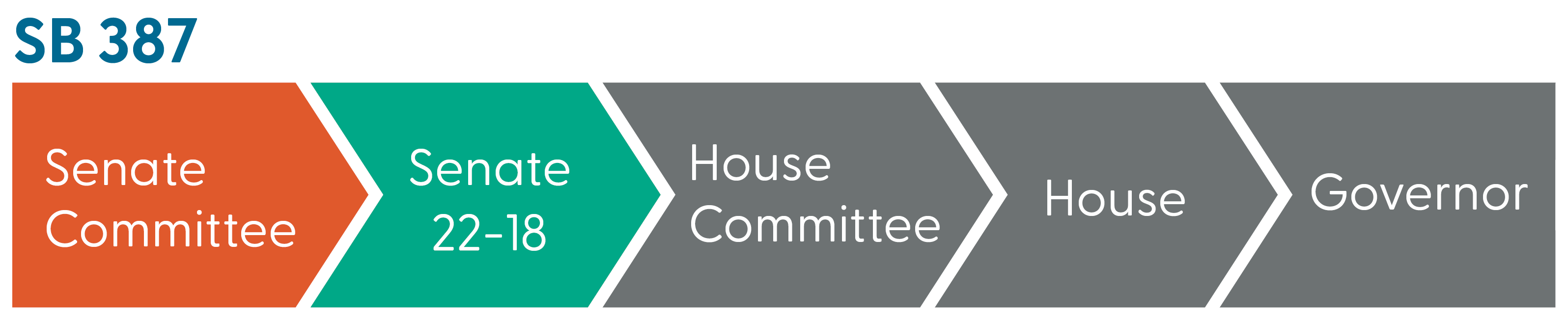 Some hope emerged this week when SB 387 barely passed out of the Senate with a vote of 22-18, far short of the number of votes required to sustain a veto. This bill was harmful from the beginning and would result in free and reduced-priced school lunches being taken away from students.
But when the Senate Committee on Government Efficiency worked the bill last week, it was amended to become even more harmful, likely heavily impacting school districts’ at-risk funding calculation. It was encouraging to see Senators on the floor articulate the same concerns we have about the bill, especially how much of the bill wasn’t truly vetted.
Even more encouraging is that a different path is emerging in regard to school meals. While SB 387 would create barriers for schools to participate in the Community Eligibility Provision (CEP), HB 2637 seeks to encourage schools around the state to adopt CEP.
CEP allows schools with high concentrations of low-income families to provide free meals to every student, regardless of their family’s income. So while SB 387 would require each school to seek legislative approval to participate in CEP, HB 2637 would encourage every school district in the state to consider participating in CEP.
Kansas has the fourth lowest CEP participation rate in the country, so it is likely some districts have not taken the steps to consider if CEP is a good fit for their schools, and HB 2637 would require them to take those steps, but not mandate school districts opt in if eligible. The hearing showed there was broad interest in the idea, but some expressed hesitation. We are still hopeful there will be more conversation around this bill early next week.
Pivotal Choice Point for Housing Policies This Session
Several hearings have been held on bills that would impact renters. In the conversation are:
-
SB 369, requiring landlords to disclose all possible fees to a potential tenant before any money is exchanged, as well as set a cap on the amount of late fees that can be charged.
-
HB 2634, setting a statewide default maintenance code, requiring landlords to maintain basic habitability standards. Kansas is one of only two states that does not currently have a default maintenance code in place.
-
SB 391, prohibiting municipalities from developing certain renter protection ordinances of their own. This passed out of the Senate Federal and State Affairs Committee this week and would interfere with some of the positive work being done to protect renters.
We will continue to watch how these competing priorities play out over the coming weeks and continue advocating for lawmakers to take the approach that will help more families access safe, affordable housing in Kansas.
Cell Phone Restriction Moves Out of Committee
 The bill limiting student access to their cell phones during the school day is likely headed to the House floor as early as next week. The newly substituted bill, House Sub. for Sub. for SB 281, also includes restrictions on how school staff directly communicate to students, prohibiting one-to-one contact via use of social media platforms or personal calls and texts. The most significant change made by the House Committee on Education was allowing the bill’s provisions to be optional for accredited non-public schools, while still requiring them for public schools.
You can read more about how the policy would work here.
KAC continues to support the bill because mounting research shows that students thrive academically and socially when they are less distracted by their personal digital devices. While we recognize concerns expressed by others and understand that kids, families, and school systems will need time to adjust, we believe the benefits to kids’ well-being outweigh logistical challenges. We’re also encouraged to see growing public awareness of the effects of digital devices on children and the importance of centering student well-being in policy discussions.
Legislature Continuing Progress on Health Bills
The positive movement on small but important bills that impact kids’ health continues. This week, the Senate unanimously passed SB 328, which would allow schools to stock any FDA-approved epinephrine delivery system. The bill moves over to the House, where we hope the strong support continues.
Additionally, the Senate Committee on Public Health and Welfare heard and passed out SB 448, which would permit the use of expedited partner therapy to treat a sexually transmitted disease. STDs transmitted to moms-to-be can cause severe complications or even death to their newborn. Allowing physicians to prescribe medication to a patient’s partner will potentially limit the number of diseases in the community.
Property Tax Plans Gaining Traction, but Which Chamber Will Win?
The Senate Committee on Assessment and Taxation made quick work of passing their plan to address high property taxes early in the session, and the House Committee on Taxation answered with a plan of their own. The key difference between these two plans is the mechanism they use to control future property tax growth.
The Senate’s plan, SCR 1616, which would require voters to approve language to be added to the Kansas Constitution, would cap the growth in assessed valuation of a property to no more than 3% per year. Policies like this, the most famous of which is California’s Proposition 13, tend to distort real estate markets by locking people into a home for fear of losing their preferential tax treatment if they move.
This plan would also heavily disincentivize new construction, as it rolls assessed values back to 2022 levels plus three percent. This means that homes built after 2022 will not benefit from the same tax advantage as existing homes, which will drive up demand – and prices – for the current stock of housing.
HB 2745, however, takes aim at local budgets, imposing a 3% growth cap on total property tax revenue unless voters choose to override the limit. This plan, which KAC offered testimony in support of, also creates a special fund that provides a dividend to counties that stay within the 3% limit.
Limiting the growth in total revenue is the better way to rein in property tax bills because it doesn’t have the distortionary impact that assessment limits do. The House plan also does not require a constitutional amendment like the Senate’s, giving lawmakers more flexibility in the future.
Constituents have been clear on their desire for action on property taxes. What remains to be seen is which plan will come out on top.
Budget Plans Nearing Floor Action
 The House Committee on Appropriations and Senate Committee on Ways and Means spent the full week getting their plans close to a final first draft. The House budget plan, HB 2434, has been sent to the House floor for consideration, while the Senate plan, SB 315, has a few final adjustments left for the Committee to consider next week.
Although the Senate may still make changes, we have a clearer idea of what the House and Senate include (or don’t include) in their proposals.
As a positive, both plans include funding for the increased caseload on the Children’s Health Insurance Program (CHIP) and funding for the Technical Assistance waiver, which keeps kids with complex medical needs out of hospitals and at home with their families.
There are several items where the chambers differ, however:
-
SNAP Administrative Funding. Both bills include $12.1 million to fund the increased state match now required for SNAP administration, but the Senate’s version makes the funding contingent on the Department for Children and Families (DCF) sending SNAP applicants’ data to the federal government.
-
Funding for Part C, Infant and Toddler Developmental Services. The House proposes funding this program with state funds and the Senate proposes using TANF dollars. Funding the program with TANF is a concern because it is not a sustainable funding source. In addition, the $5.8 million acts as a maintenance of effort, and TANF would not be eligible to be used in this way, putting federal funding for the program at risk.
-
Immunizations. The House budget includes language that requires the state to match its vaccination recommendations with those made by the Centers for Disease Control and Prevention (CDC). In early 2026, the CDC reduced the recommended vaccine list to only 11 vaccines. Kansas’ current list goes beyond those 11 vaccines to also continue to recommend vaccines against RSV, Hep A, Hep B, Rotavirus, meningococcal, and flu. We will continue to monitor this provision closely as health advocates work to educate members about the impact of this provision.
-
Summer EBT. The Senate bill includes Summer EBT funding, but makes it contingent on the implementation of the waiver that prohibits SNAP benefits from being spent on soda and candy. This is particularly concerning because, while the waiver has been submitted by the state, it’s currently in the hands of the federal government, and all the state can do at this point is wait for the waiver’s approval.
- DCF Budget. The House bill includes language that withholds $10.0 million from the DCF budget to be returned when the SNAP candy/soda waiver has been approved and implemented.
What to Expect in Week 6

As we approach Week 6 of the legislative session, we’re nearing the halfway point – and a major legislative deadline. By Monday, most committees will have completed their initial work on bills this year ahead of the Turnaround deadline next Thursday. By that day, non-exempt* bills have three paths: 1) get passed through the first chamber, 2) get “blessed” by leadership so it can pass the deadline without floor action required, or 3) be deemed “dead” and unable to move forward.
* Exempt bills are any that have had a touch point with an exempt committee, including tax, federal and state affairs, and appropriations.
Both the Senate and House are scheduled to have full days on the floor Tuesday to Thursday. So much is possible while they’re on the floor, and a bill could look vastly different after any amendments approved by the full chamber.
We’ll be keeping a close watch on what lawmakers prioritize next week and how it will shape the last half of the 2026 session. If you are passionate about any bills ahead of their action next week, now is the time to email or call your lawmaker and urge them to support or oppose your priority. With enough people reaching out, it may just make a difference in the final vote count.
Share

