


Education Funding: How Does Kansas Compare to Other States?

Emily Barnes | October 9, 2025
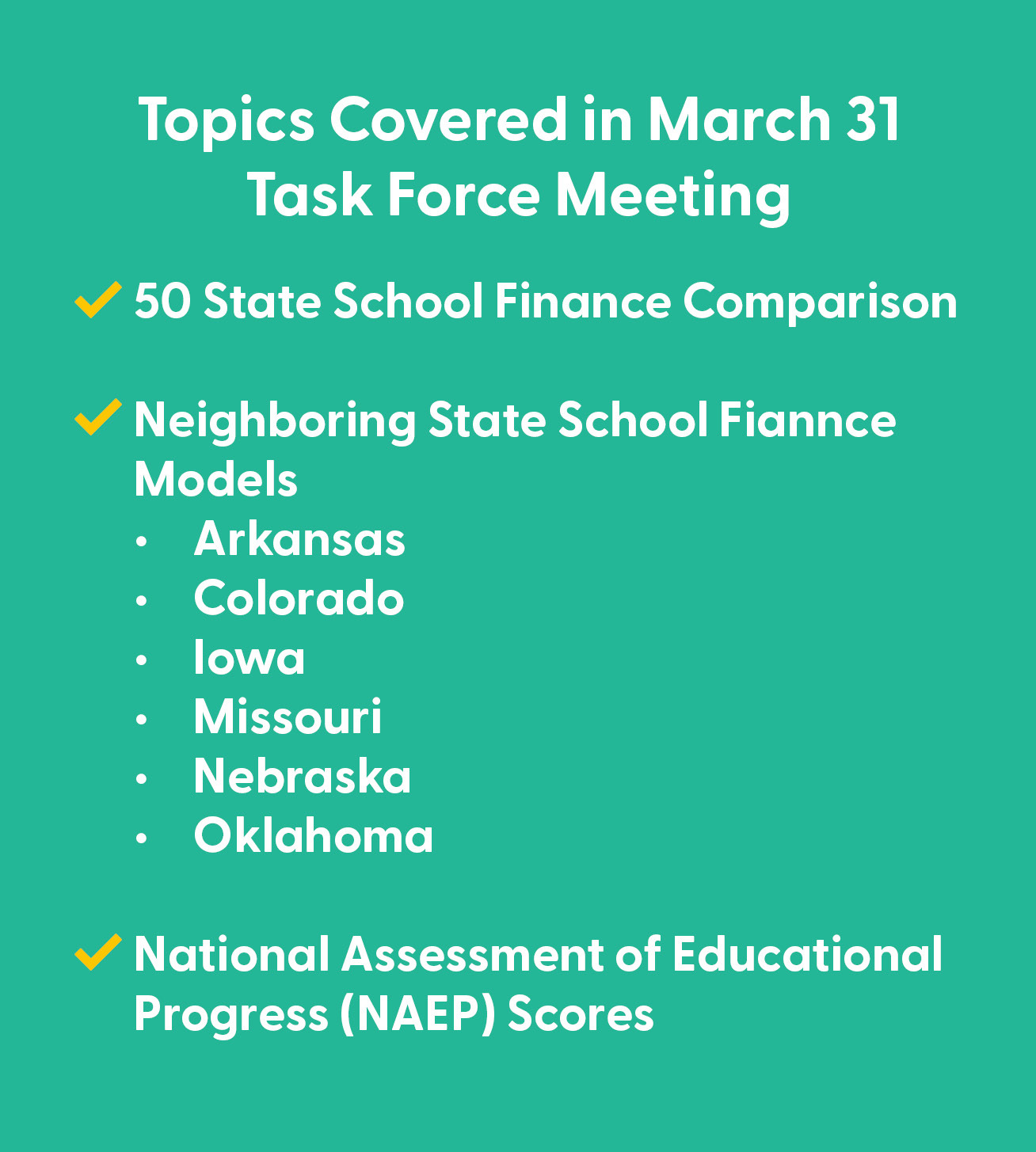
In this writeup, we continue our analysis of the Education Funding Task Force meetings this year. On March 31, 2025, the Task Force met to primarily learn about other states’ funding models.
Public Materials Provided to Task Force Members during or about This Meeting
- 50 State Funding
- Kansas and the Surrounding States Memo
- Colorado School Finance Formula
- Iowa School Finance Formula
- Missouri School Finance Formula
- Nebraska School Finance Formula
- Oklahoma School Finance Formula
- 2024 NAEP Scores - Reading and Math
- Minutes for March 31, 2025
School Funding Basics – Terms to Know
Before diving into the specifics of the March meeting, it’s important to understand several school funding terms.
First, there are two types of funding models:
-
Primary Funding Model: Money that is provided to districts for general use and often cover basic costs like teacher salaries and instructional materials. They are most often student-based or resource-based.
- Student-Based Funding Model: When a district receives a base amount of funding per student, with additional money or weights added to provide additional services and support to students with unique needs.
-
Resource-Based Funding Model: When a district receives funding that will pay for minimum-required resources like staffing, services, or programs.
- Hybrid Funding Model: When a district uses a combination of student-based and resource-based funding models.
A few exceptions to these two funding models are:
-
Education Fund: Vermont uses this by coupling the state’s education finance system with local property taxes. District spending is approved at the local level by the school board and voters. The Vermont Legislature sets the property tax rates and education yields each year
- High-Cost Services Funding: Specifically for special education, Connecticut and Rhode Island use this model to enhance its typical appropriations. These states use this option when the cost of services for a student exceed a certain amount determined by that state.
When discussing school funding issues, you will likely hear the term “formula,” which refers to the way a state calculates what each district should receive to function. Going further, you may hear the term “Cost-Sharing Formula,” in which both the state and local districts contribute to school funding. Wisconsin uses a type of Cost-Sharing Formula called “Equalization Aid,” which is determined by three tiers of calculations.
Elements of school funding formulas include:
-
Base Amount: The minimum guaranteed dollar amount per student that a state allocates to every school district. Some states, like Kansas, include an inflationary requirement.
-
Weightings: Formulaic valuations based on certain student characteristics that reflect the additional costs a district may face when providing services to its students. These are also referred to as Funding Mechanisms.
-
Single Weight: When providing supplemental services for students and districts, a single percentage is multiplied by the base amount.
-
Multiple Weight: More than one weight is allocated based upon certain student characteristics. The amount allocated for a student’s needs may vary to more likely ensure costs are covered.
-
Single Weight: When providing supplemental services for students and districts, a single percentage is multiplied by the base amount.
-
Categorical: This is allocation of funds to school districts through funding streams that are external to the primary funding model. This is used for expenditures specific to implementing special education services, such as transportation or staffing reimbursement.
- Census-Based: When funding amounts are based upon the attendance or enrollment counts of the overall student body.
Finally, a few other terms to know:
- Reimbursement: This is a state aid method that requires the submission of receipts of eligible expenditures to the state. The state will then reimburse all or part of the expense. Kansas uses reimbursement for Special Education services.
- Resource Allocation: This is the method used when states allocate funds to pay for specified staffing positions.
Meeting Summary
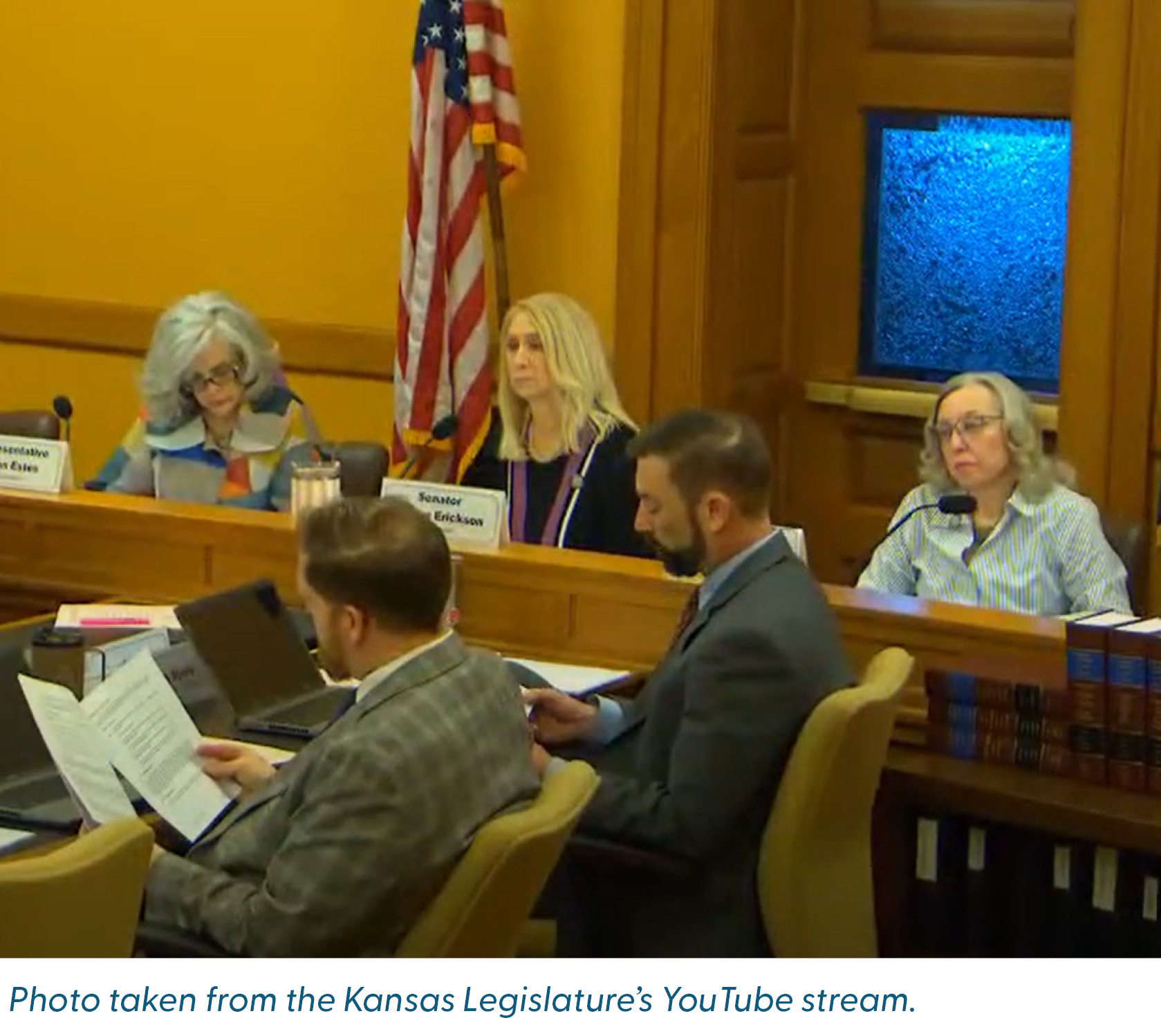
When the Education Funding Task Force resumed in March, the agenda focused on the different mechanisms used in education finance formulas across the country.
Most states, including Kansas, use a student-based model as their primary funding model. This means that school districts receive a base amount of funding per student with additional funding for unique needs. Some states allocate funding by resource, meaning that districts receive funding for the minimum services they provide. A handful create a hybrid model of student-based and resource-based, while two states create education and/or equalization funds that rely on heavier local contributions.
The Task Force heard how states use a variety of mechanisms to calculate funding allocations to districts, the most common being base aid and weightings. Additionally, like Kansas, some states utilize categorical funding, which are external funding streams utilized for student special education services. Census-based funding is another option for states, and it is calculated by the attendance or enrollment of the overall student body.
For special education services, some services will be paid for by reimbursement, as it is in Kansas, and at other times, states may create dedicated funds for high-cost services. Mississippi uses a tiered system, which allocates funding in different amounts determined by the student’s exceptionality.
Kansas uses Base Aid for Student Excellence (BASE) as the starting amount a district receives per student for regular education services. When students need other services like Individual Education Plans (IEPs) or English Language Learner services, the supports necessary to provide their education cost more. The district then uses a weighting to calculate, based on the student characteristic, what additional amount is needed to reflect the total costs a school will incur while providing those enhanced services to certain students.
For special education services, Kansas uses a reimbursement model coupled with a special education weighting. Special Education Reimbursement is the form of state aid that districts use to cover the additional costs – also referred to as “Excess Costs” – of providing services to students with disabilities. These costs go beyond what districts pay for general education services. Kansas must fund excess costs at 92%, but due to budget limitations, often cannot.
The 2024 National Assessment of Educational Progress (NAEP) Scores for all 50 states ranked from highest to lowest were presented to the Task Force. Legislative staff highlighted Kansas and the example states for comparison of performance. The Task Force wondered about receiving an analysis that gives a contextual understanding of the significance of the scores.
Other Regional States’ Funding Models
The Task Force members learned more specifics about the models used in Arkansas, Colorado, Iowa, Missouri, Nebraska, and Oklahoma in comparison to Kansas. Each state has unique features; however, all the example states use student-based models and most use student enrollment numbers as their basis. Many of these states include a “minimum guaranteed base amount,” but only Kansas and Colorado include an inflationary requirement when calculating their primary finance formula.
The conversation focused on how each state calculates their formulas and how they compare to Kansas’ model. For instance, while Iowa still uses a student-based funding model, it calculates its Foundation Aid slightly differently than Colorado and Kansas based on property taxes and the lesser of either a base or the cost per pupil.
Further discussion included questions about the effectiveness of considering low-income backgrounds and English language learners in formulas. Task Force members also requested more details about other funding streams like motor vehicle and utility collections.
Key Discussion Points
In reference to the 50 state comparison of different funding models, the Task Force requested more information about Mississippi’s three-tiered system and clarification about how single weighting mechanisms work. They also hoped to better understand the funding streams available for categorical mechanisms, like for low-income students, and how different mechanisms are separated in a district’s budget. They also would like a clearer picture of how the mechanisms used may represent special education students in comparison to all students.
During discussion about each of the example states’ funding models, the Task Force looked more in-depth at several differences.
When reviewing Arkansas’ funding system, Task Force members hoped to receive more information about how that state’s calculations would look with a higher property tax rate and whether their uniform tax rate is the same across the state.
They requested to see a five-year timeline of Colorado’s formula and how Colorado calculates its district-funded pupil aid. They are looking to compare Kansas’ local and state tax contributions to Colorado’s and have a better understanding of the use of Kansas’ 20 mills.
Task Force members also asked to better understand Iowa’s School Budget Review Committee and how the state determines its student count, foundation base per pupil, and the combined district cost per pupil.
For Missouri, it was pointed out that its funding is determined using weighted average attendance rather than enrollment and relies heavily on district’s ability to meet performance standards set by the Missouri Department of Elementary and Secondary Education for accreditation. Regional wage ratios across the state and local effort also factor into their calculation. The Task Force requested to learn more about the connection between absenteeism and attendance calculations and what performance standards and indicators qualify a school to be declared as a “performance district” in Missouri.
Nebraska’s discussion opened up questions about transportation aid, English proficiency, and poverty. There were also questions about revenue sources for both Nebraska and Oklahoma.
As the meeting ended, the conversation turned to the desired direction of the Task Force’s remaining work. Information about preschool and virtual education funding in Kansas and surrounding states was requested. There was also interest in understanding what it costs a state to create the new formulas and how to identify new resources needed.
Spring and Summer Meetings
At the end of the March meeting, the Task Force was told they had a “blank check” for meeting and could have as many as needed. They also discussed what their goal was, at that time, to present a draft formula and framework of the next Kansas school funding formula in 2026 by the end of the 2025 calendar year.
Our future review of the May, June, July, and August meetings will dig more deeply into specific weightings and how they influence the funding school districts receive. As this blog series continues, we’ll explain the information the Task Force learned relating to how weightings work and their intended impact on positive outcomes for Kansas students.
< Back to the news list
Share

