


Feeling the Pinch: The Need for a Kansas Child Tax Credit

Nathan Kessler | December 15, 2025
The need for a state child tax credit (CTC) in Kansas has never been clearer. Basic necessities have become more expensive, and more Kansas families are forced to make difficult financial decisions every day. Since 2015, and particularly within the last three years, the cost to raise a child has risen rapidly, forcing Kansas families to stretch their budgets.
According to the U.S. Department of Agriculture, the cost to raise a child born in 2015 was approximately $233,600. Adjusted for inflation, this suggests the cost to raise a child born in 2025 from birth through age 17 is nearly $320,000. Since September 2015, costs in the Midwest have risen 33.9%, and the cost of living remains the top concern for many families.
Despite substantially higher costs associated with raising a family, lawmakers haven’t yet taken the opportunity to deliver targeted relief for families feeling the greatest pinch in their budgets. A state CTC would be an effective strategy for providing targeted relief to families with the greatest financial need.
Why a Kansas CTC?
A state CTC, especially one that is refundable, would give parents more financial freedom at a time when bank accounts are spread thin. For some, this can mean more food on the table or more gas in the car, while others may purchase school supplies, pay down debt, or supplement their emergency savings. Whatever a family’s needs may be, a state CTC can offer them a bit more flexibility.
A 2022 study analyzed how families used federal CTC payments and found that the top three uses were for routine expenses, essential items, and groceries. These results suggest that state CTC payments would be put to good use ensuring the needs of Kansas children are met.
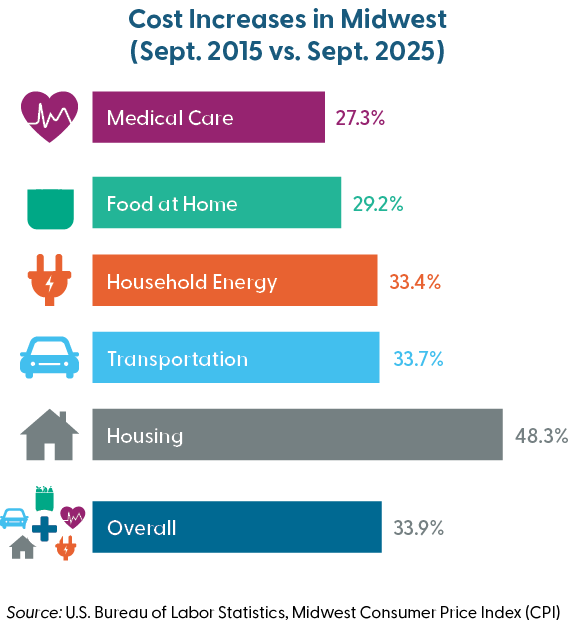
The chart shows how much costs for various necessities have increased over the past ten years. The goods and services represented in this chart make up the bulk of a typical family’s budget – especially housing, which often makes up one-third of a family’s annual expenses. These are the areas where a state CTC can make the greatest difference.
Even if only provided once a year during tax season, an infusion of funds or reduction in tax liability can give families an opportunity to make an extra mortgage payment, cover the rent, or pay down debt. This frees up funds immediately and in the future by reducing other liabilities, allowing families to better participate in their local economies.
Conveniently, the Kansas Legislature already has legislation that it can act on during the 2026 legislative session. SB 179 would provide a refundable CTC for children ages 0-5, with low-income families benefiting the most. This particular CTC would cost the state about $52 million per year – less than the total ticket revenue from two sold-out games at Arrowhead Stadium – and would benefit the families of 170,000 Kansas kids.
The First Step
A CTC is one of the most effective tools for lifting children out of poverty, as parents utilize the payments for food and essential items. This makes it useful in addressing the mounting costs of raising a family. While tackling the broader issue of affordability will require coordinated efforts from all levels of government, a state CTC is a popular first step that the Legislature can take in 2026.
Policies like a state CTC that provide a greater sense of economic security would make Kansas a more attractive place to start or raise a family. Of the 17 states and D.C. that already have their own CTC, 12 are refundable.
By adopting similar legislation, Kansas will be more competitive in attracting and retaining families, growing Kansas communities for generations. This improved competitive position could lead to a stronger labor force and increased economic activity, in addition to the primary benefit of improving the lives of children in Kansas.
More work will be needed to address the ongoing cost-of-living crisis, but putting money back in the pockets of working families through a state CTC is a key step that lawmakers can take now to relieve some pressure and provide a greater sense of financial security.
< Back to the news listShare

