


State of the State Economy: August 2025
Nathan Kessler | September 24, 2025
Another month has gone by, another round of data has been released, and another analysis on the state economy is here to close out the summer. We have a lot to dig into, but it can be summed up by saying this month’s update feels a bit like the first cool breeze of fall signaling the cold winter ahead.
State Revenues
In August 2025, Kansas collected $692.3 million in tax revenue, beating estimates by $26.2 million, or about 3.9% higher than expected. This puts total FY 2026 tax collections at $1.36 billion so far, which is 13.7% of the expected $9.95 billion for the full year.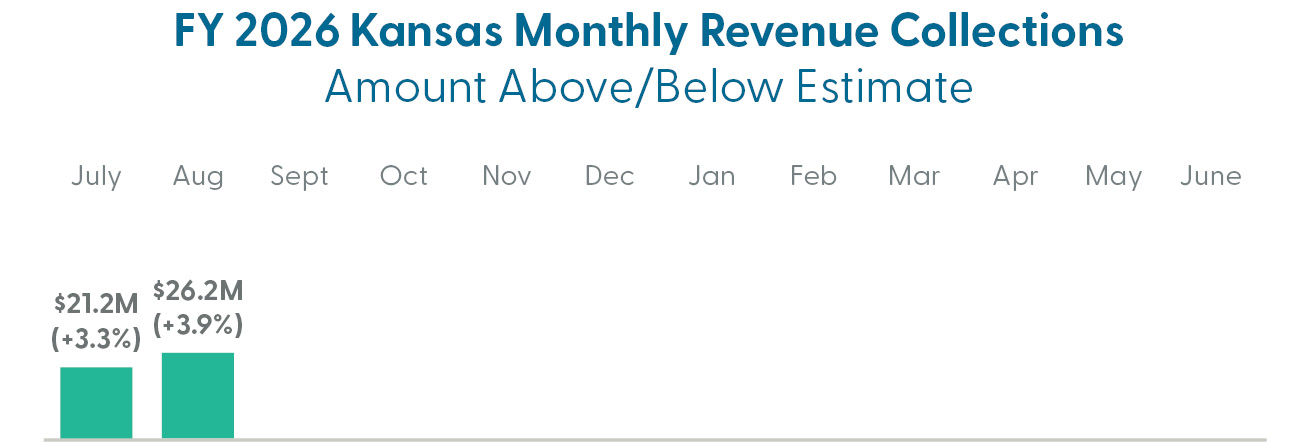
Just like in July, individual income taxes were a driving force behind the extra tax collections in August, as corporate income and most excise, or “sin,” taxes failed to live up to expectations. Sales and use taxes, however, also contributed to higher revenues in August, with both categories beating expectations by more than $5 million.
Compensating use tax, in particular (which is generally collected by out-of-state sellers for online purchases) has been contributing more to state revenues this year. While only about one-third the size of the sales tax category, compensating use tax is growing as a percent of total collections.
Regional Inflation
Last month, we noted that the large jump in the Producer Price Index likely signaled higher prices for consumers were on the way. That prediction seems to be playing out already, as the Consumer Price Index for the Midwest Region was up 2.8% over the year in August. Core inflation, which removes the effects of food and energy price changes, rose by 3.0%.
Digging a little deeper into the data, food prices in the Midwest, specifically food at home, made a big move in August that could pinch Kansans’ budgets. The cost of food at home was up 1.0% in August, compared to 0.3% for prices overall. This translates to a 3.0% increase compared to last year.
While food prices tend to be more volatile than prices overall, last month’s jump represents the largest 12-month increase since July 2023. On a monthly basis, this August’s 1.0% increase was the largest since July 2022, with the exception of January this year. The point is that while food prices are volatile, such large movements aren’t typical.
Tariffs likely contributed to the jump in the cost of food, as a large amount of grocery store items are imported or rely on imported materials or goods. To put a finer point on how tariffs impact food prices, one only has to look to the price of coffee because 99% of coffee consumed in the United States is imported. In August, the price of coffee was up nearly 21% compared to last year.
Employment
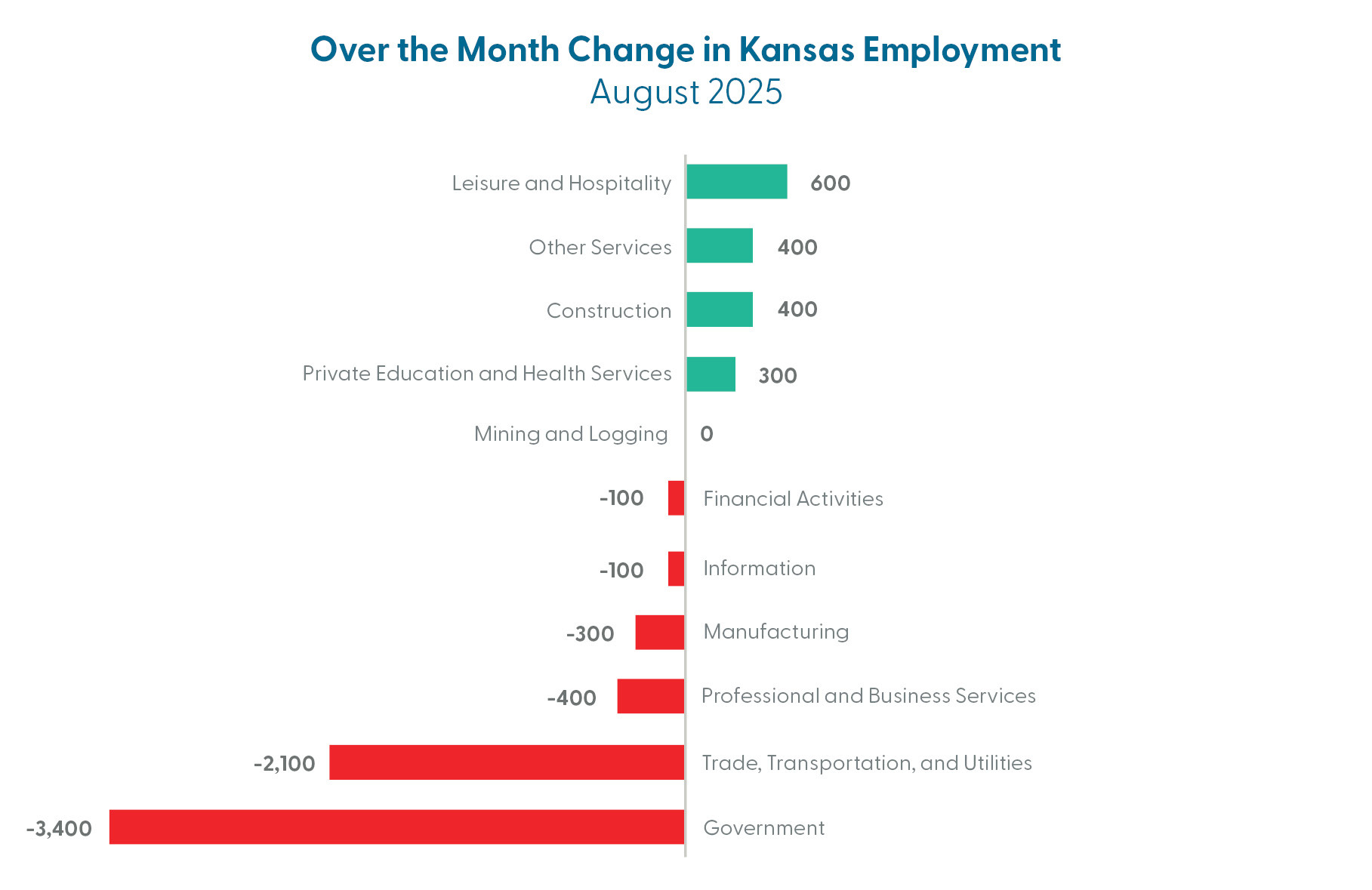
Kansas experienced another month of job declines in August, with total nonfarm employment falling by 4,700. While state and local government saw the largest job losses, employment in the private sector also fell by a net 1,300 jobs. The driving force behind private sector declines was the trade, transportation, and utilities industry, which shed 2,100 jobs in August.
While total employment has declined in the past year, the unemployment rate remained unchanged at 3.8% in August. Since September 2024, the statewide unemployment rate has held steady at 3.8%, and regional unemployment has mostly been stable as well. However, Southeast Kansas has experienced a fairly large increase in unemployment over the past year and now has a regional unemployment rate of 5.2%, well above the statewide average.
As of this writing, Kansas has lost about 10,000 jobs since last August, representing the first over-the-year decline in employment since March 2021. Nearly all of this decline can be attributed to local government employment, so the losses are contained for now. However, private sector employment is virtually unchanged in the past year, suggesting sluggish hiring that should be monitored for further weakness.
The Big Picture
Overall, this month confirms the economy is not exactly humming along. And while it is not exactly falling apart either, these things tend to happen gradually and then all at once. In this moment, the word that best describes the Kansas economy is “precarious.”
State revenues beat estimates for the second month in the fiscal year, but all of the upside is tied to individual income and consumption taxes. This suggests that higher prices and higher wages are driving higher revenues. This dynamic is not a problem until consumers and employers start tightening their belts, potentially leading to less spending, reduced hours at work, and even layoffs. While that may not fully play out, it highlights the uncertainty around state revenues and what could be a bumpy road for the state budget.
For now, higher prices are likely to continue contributing to state coffers at the expense of Kansas families’ finances. Prices rose by 2.8% last month, with necessities like food and shelter being hit the hardest. Much of the benefit families got from the elimination of the state sales tax on groceries is being washed away by higher prices at the grocery store, which are likely linked to the high tariffs in place on many U.S. trade partners. With food at home costing 3.0% more than last year, Kansans are going to need to stretch every dollar they can.
As higher costs bite family budgets, the Kansas jobs market appears to be slowing down. While job losses over the past year are mostly concentrated in government employment, the private sector is also not growing. This likely reflects some uncertainty among Kansas employers about the future direction of prices, interest rates, and consumer spending. During periods of high uncertainty, it is common for employers to slow hiring while they await more information.
The economy appears to be at an inflection point, and the direction we are going in will become clear in the coming months.
< Back to the news listShare

