


Upcoming Key Dates of ‘Big Bill’ Implementation
Heather Braum | October 29, 2025
Many provisions of H.R. 1, otherwise known as the “Big, Beautiful Bill,” will go into effect at different times over the next decade. Here are some key dates to be aware of over the next year.
We’ll continue to update timelines for tax, economic security, health, and education changes impacting kids and families. This first post covers January 1, 2025, through October 1, 2026.
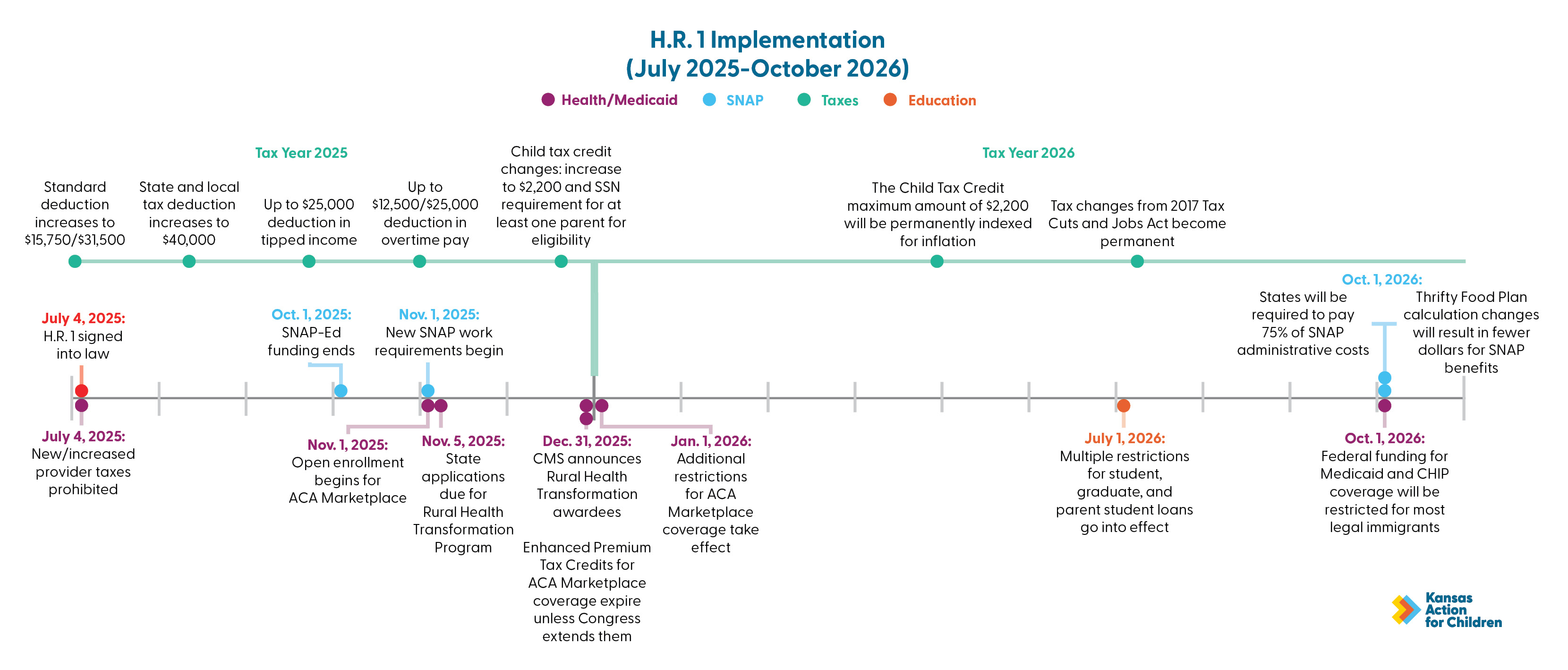
(Click to enlarge or download)
Taxes
Many of the tax provisions in H.R. 1 are effective for tax year 2025. This means that when families go to file their taxes in April 2026, they can expect to see a few changes on their tax returns. There are also a few provisions that are effective beginning in tax year 2026.
-
January 1, 2025
- Standard deduction increased by $750 ($1,500 for married filing jointly) to $15,750 ($31,500 for married filing jointly).
- Through 2029, households with incomes under $500,000 can deduct up to $40,000 in state and local taxes (increased from $10,000).
- Through 2028, tipped workers can deduct up to $25,000 (up to $150,000 income or $300,000 for married filers). This was previously not deductible.
- Through 2028, individuals earning up to $150,000 ($300,000 for married filing jointly) can deduct up to $12,500 ($25,000 for married filing jointly) in overtime pay. This was previously not deductible.
- Children born between January 1, 2025, and December 31, 2028, will receive $1,000 in a Trump Account; this is a new program.
- Child Tax Credit changes:
- Credit amount increased to $2,200 per child (previously $2,000).
- If neither parent has a Social Security number, their child will not be eligible for the Child Tax Credit, even if the child is an American citizen. Nearly 25,000 Kansas children will lose access to this credit.
- Standard deduction increased by $750 ($1,500 for married filing jointly) to $15,750 ($31,500 for married filing jointly).
-
January 1, 2026
- The Child Tax Credit maximum amount of $2,200 will be permanently indexed for inflation.
- Additional tax provisions from the 2017 Tax Cuts and Jobs Act will become permanent (more details here).
- The Child Tax Credit maximum amount of $2,200 will be permanently indexed for inflation.
SNAP
H.R. 1 cuts the Supplemental Nutrition Assistance Program (SNAP) by around $178 billion over the next 10 years. While a large portion of those cuts are paid for through cost shifts to the states (which will become effective in 2028), one other SNAP policy the bill changed was implementing stricter work requirements and removing exemptions for certain individuals. These policies are expected to impact the number of people who can qualify for benefits.
Additionally, H.R. 1 eliminated SNAP eligibility for refugees, asylees, or those with other immigration statuses. This provision awaits federal guidance from the U.S. Department of Agriculture, but could take effect at any time after that guidance is released.
-
October 1, 2025
- SNAP-Ed funding ends for nutrition education. Here’s one example of SNAP-Ed’s impact in Kansas.
- SNAP-Ed funding ends for nutrition education. Here’s one example of SNAP-Ed’s impact in Kansas.
-
November 1, 2025
- According to October 3 USDA guidance, the SNAP work requirement now includes adults with all children ages 14 and older; adults between the ages of 55 and 64; veterans; people experiencing homelessness; and youth aging out of foster care (ages 18 to 24). Read more here.
- According to October 3 USDA guidance, the SNAP work requirement now includes adults with all children ages 14 and older; adults between the ages of 55 and 64; veterans; people experiencing homelessness; and youth aging out of foster care (ages 18 to 24). Read more here.
-
October 1, 2026
- States will be required to pay 75% of SNAP administrative costs. Previously, the state and federal government equally shared the costs associated with administering SNAP. The 2026 Kansas Legislature will have to account for this cost increase (estimated between $15 million to $20 million) in the state’s FY 2027 budget.
- SNAP benefits won’t increase to reflect the inflated cost of a basket of food. Instead, the Thrifty Food Plan will be updated to reflect the Consumer Price Index. This is expected to result in recipients having to stretch dollars further when purchasing groceries.
- States will be required to pay 75% of SNAP administrative costs. Previously, the state and federal government equally shared the costs associated with administering SNAP. The 2026 Kansas Legislature will have to account for this cost increase (estimated between $15 million to $20 million) in the state’s FY 2027 budget.
Health
At nearly $1 trillion over the next decade, H.R. 1 delivered the largest cut to the Medicaid program in its 60-year history. For changes within the first year of implementation, Kansans will see tighter timeframes and higher premiums if seeking coverage on Healthcare.gov.
-
July 4, 2025 (bill signing)
- New or increased provider taxes are prohibited in all states for Medicaid financing, as well as new limits on state-directed payments in Medicaid financing. Kansas increased its provider taxes right before this provision went into effect.
- New or increased provider taxes are prohibited in all states for Medicaid financing, as well as new limits on state-directed payments in Medicaid financing. Kansas increased its provider taxes right before this provision went into effect.
-
November 1, 2025
- Open enrollment begins nationally for marketplace insurance coverage through Healthcare.gov. People will see a significant cost increase for their insurance premiums, if Congress has yet to extend the enhanced premium tax credits that were not included in H.R. 1. Around 200,000 Kansans are enrolled in marketplace coverage, including nearly 19,000 kids.
- Open enrollment begins nationally for marketplace insurance coverage through Healthcare.gov. People will see a significant cost increase for their insurance premiums, if Congress has yet to extend the enhanced premium tax credits that were not included in H.R. 1. Around 200,000 Kansans are enrolled in marketplace coverage, including nearly 19,000 kids.
-
November 5, 2025
- State applications are due for the Rural Health Transformation Program, for shares of a $50 billion pot of money, with $10 billion paid out per year over the next five years. (Kansas has published information about the application process, as well as shared publicly recorded meetings around the application development.)
- State applications are due for the Rural Health Transformation Program, for shares of a $50 billion pot of money, with $10 billion paid out per year over the next five years. (Kansas has published information about the application process, as well as shared publicly recorded meetings around the application development.)
-
December 31, 2025
- The Centers for Medicare and Medicaid Services will announce Rural Health Transformation awardee decisions.
- Enhanced Premium Tax Credits for marketplace insurance plans expire unless Congress extends them.
- The Centers for Medicare and Medicaid Services will announce Rural Health Transformation awardee decisions.
-
January 1, 2026
- Additional restrictions for marketplace insurance coverage go into effect, including prohibiting premium tax credits for those enrolling during a special enrollment period because of income and eliminating advanced premium tax credit repayment caps.
- Additional restrictions for marketplace insurance coverage go into effect, including prohibiting premium tax credits for those enrolling during a special enrollment period because of income and eliminating advanced premium tax credit repayment caps.
-
October 1, 2026
- Federal funding for Medicaid and CHIP coverage will be restricted for most legal immigrants.
Education
While much of the bill focused on program spending and tax cuts, H.R. 1 will impact this year’s high school seniors’ ability to plan for post-secondary education, particularly through federal loan changes.
-
July 1, 2026
- Multiple restrictions regarding student, graduate, and parent federal loans go into effect, including lifetime caps, Pell Grant eligibility, and programs eligible for federal loans. Review our H.R. 1 analysis for more information.
More to Watch
We will continue to learn more in the coming months as federal and state agency guidance is released or additional policies go into effect. Many more provisions will be going into effect in the coming years that will impact Kansas families and the state’s budget, and we’ll be here to capture those so advocates, lawmakers, and families can plan for the future.
To gain a bigger picture of the provisions going into effect over the next decade, we recommend consulting these trackers:
- Center on Budget and Policy Priorities Timeline
- KFF – Health-specific Provisions Timeline
- Immigration Applicants for Federal Benefits Timeline
Share

