


State of the State Economy: Month of December 2025
Nathan Kessler | January 27, 2026
All economic data is finally back on track after the record-breaking government shutdown in November. That means, for the first time in what feels like a lifetime, all of the data provided in this economic update references the same month. Now, let’s dig into the data from the final month of 2025.
State Revenues
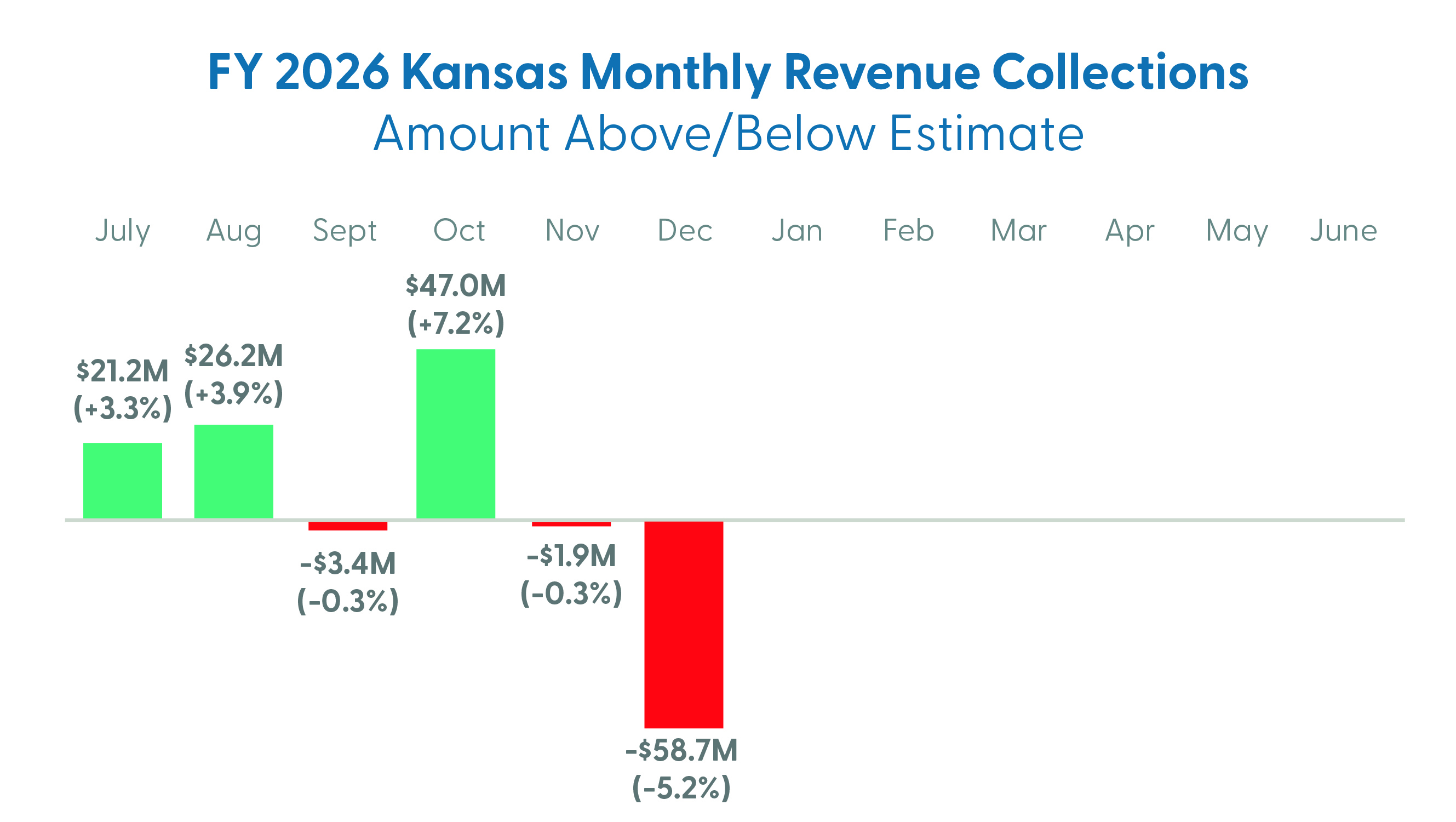
The state collected $1.07 billion in tax revenues in December 2025, which was 5.2% less than the expected $1.13 billion. December’s revenues bring total collections to $4.82 billion halfway through FY 2026, which is $60.6 million short of expectations.
December was the first month this fiscal year in which individual income tax collections were below estimates. Strong individual receipts have been driving higher-than-expected revenues in FY 2026, but it is unclear if that trend will continue in the back half of the fiscal year.
When the Consensus Revenue Estimating (CRE) Group met in November, they were unable to fully explain the high individual income tax receipts but suggested it could be partially related to inconsistent timing in implementation of the new withholding tables outlined in SB 1 during the 2024 Special Session. If this is the case, the state could be issuing a substantial amount of refunds this tax season – and total revenues for this fiscal year may fall well short of the forecasted $10.1 billion.
Kansas Jobs
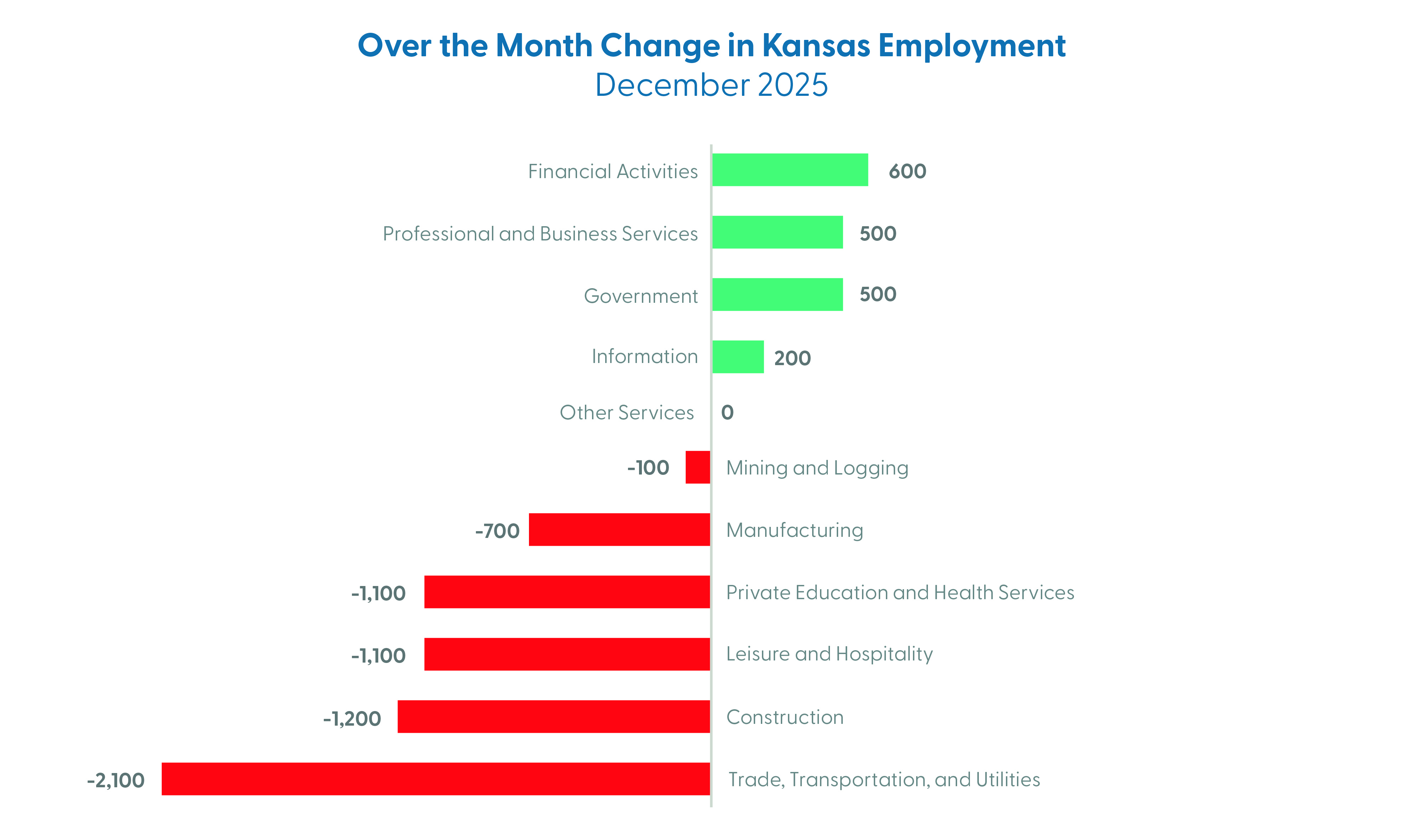
In its first timely report since the federal government shutdown disrupted the normal flow of information, the Kansas Department of Labor reported that the Kansas economy lost 4,500 jobs in the month of December. The losses were driven by the private sector, which shed 5,000 jobs while government employment rose by 500.
Trade, transportation, and utilities led the losses in the private sector with a decline of 2,100. Employment declined in several other industries, with construction, leisure and hospitality, and private education and health services each losing more than 1,000 jobs. With December’s decline, Kansas employment is down 1,400 jobs over the year.
In better news, average hourly earnings in the private sector rose in December, though median tends to be a better measure of wages, and the unemployment rate held steady at 3.8%. With this continuation, the Kansas unemployment rate has been at 3.8% since September 2024.
Regional Inflation
Overall prices in the Midwest rose 2.7% over the year in December, reflecting the increase in the U.S. more broadly, though the costs of certain necessities continue to rise at an alarming pace. Notably, the cost of housing and energy for that housing increased considerably faster in the Midwest than in the U.S. overall.
Compared to December 2024, housing in the Midwest was up 4.4%, while rents, specifically, were 3.9% higher. At the same time, household energy rose 11.1%, including an 11.4% increase in both electricity prices and utility gas services. Heading into the coldest months of the year, this combination of higher prices could put serious financial pressure on families across the state.
Excluding food and energy, prices in the Midwest were still higher by 2.7% compared to 2.6% for the nation. This small difference can mostly be attributed to the larger increase in the cost of housing in our region. While there were a few bright spots in the latest inflation data, including food at home and gasoline, the overall report suggests cost-of-living concerns aren’t going away any time soon.
The Big Picture
There weren’t a lot of promising trends in this month’s economic data, which, at best, points to a state economy struggling to gain any traction. Job growth is essentially flat over the past year, while key industries for economic activity shed thousands of jobs in December. And while earnings were up in the private sector, the rapidly rising cost of housing and household energy chips away at the purchasing power of those wages.
Additionally, the outlook for state revenues remains unclear after strong receipts throughout the first half of the fiscal year were offset by a revenue miss in December. With total receipts now lower than expected as of the halfway point in the year, the big question looking ahead is how much the state will issue in refunds as tax season gets started.
Now that 2025 is fully in the rearview mirror, the first economic data drops of 2026 are quickly approaching. It’s tough to say what the year ahead will look like, but the State of the State Economy will continue to bring you the most important information from the major reports published each month.
< Back to the news listShare

