


August 2026 Newsletter

Kansas Action for Children | August 31, 2026
Want to receive this weekly recap as soon as it's released? Sign up for our emails here.
Back to School: What Kids Need to Thrive
As kids head back to school this month, new school supplies are a small part of what determines whether a child is ready (and able) to learn in the classroom. A thriving educational experience starts long before a student steps foot onto school grounds – it starts with whether that child has a safe place to sleep, enough food for every meal, and access to health care when they are sick.
A child’s ability to learn, focus, and grow isn’t based solely on lesson plans; it’s a reflection of everything happening in their life before they ever walk through the classroom door. If we want kids to thrive academically, we must start paying attention to what’s preventing Kansas families from meeting their basic needs.
School readiness means a child has had a safe bed to sleep in before they get up for school. It means they ate a filling breakfast and aren’t worried about what they’ll eat at lunch or dinnertime. It means a vision problem was caught (and treated) rather than making it harder for children to get by without glasses. And it also means children’s parents have enough financial breathing room so that when their child comes home at the end of the day, they have the time to help with homework instead of running to a second (or third) job.
This is why housing stability, food security, and access to health care can’t be separated from a child’s success in the classroom. That’s the lens by which Kansas Action for Children goes about its work to support families through state policy solutions that will make a difference to students inside – and outside – of the classroom. Back-to-school season is a good moment for advocates and engaged Kansans like you to reflect on what it will take to ensure every Kansas kid has the support they need to learn and thrive.
If you have an idea on what state leaders need to do to make life better for Kansas kids, reach out and share it with us by replying to this email. The best solutions come from those closest to the challenges, and we appreciate the perspectives that help shape the work we'll do in the coming legislative session.
New from KAC
Guide to the Legislature's New Website
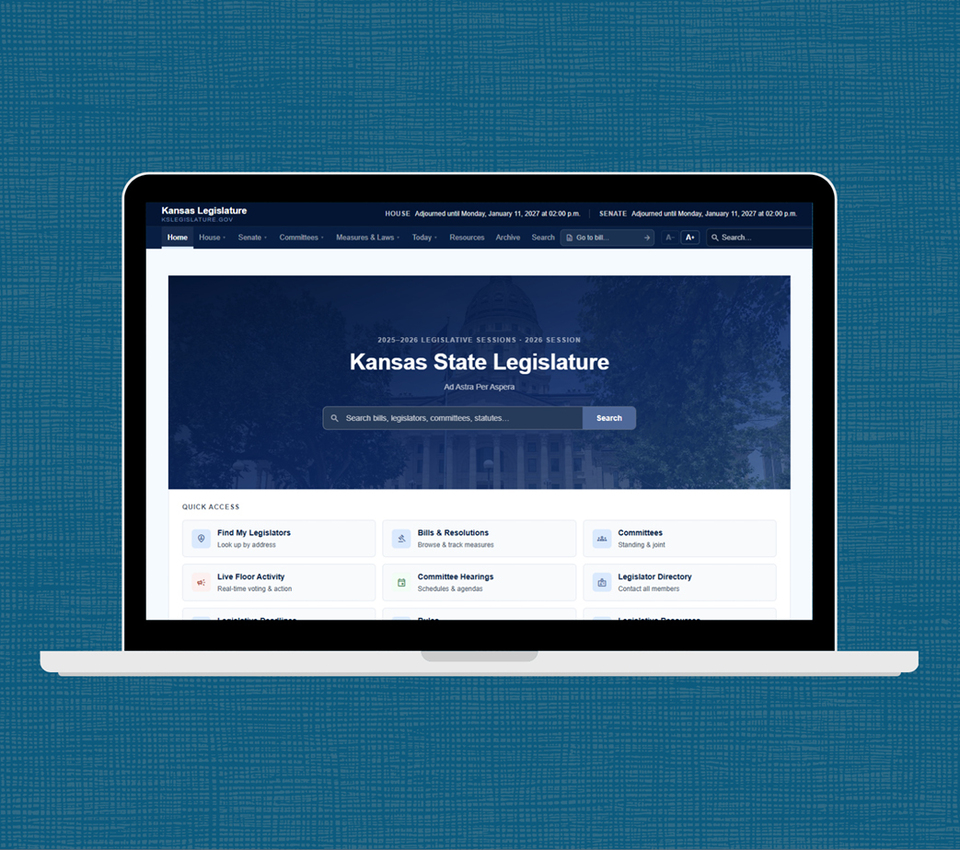 Earlier this year, the Legislature unveiled a redesigned website with new features that should make it easier for advocates – and the general public! – to track bills and look up lawmaker information during the legislative session. Check out our recent guide on where to find things related to the Kansas Legislature.
And don’t forget – KAC's Advocacy Guide, which we published last year, gives key information on how bills become laws, the legislative schedule every spring, and tips for how you can advocate for the issues you care about all year long.
Where Do Medicaid Dollars Go in Kansas?
Over the past year, there have been calls from some state lawmakers to cut spending from the state’s Medicaid program as a way to begin balancing the budget. But, as detailed in our newest breakdown of the state’s current spending within the Medicaid program, there aren’t areas to cut without taking away health care access from children, very low-income parents, people with disabilities, or seniors. As we share in our latest breakdown on Medicaid funding in the state, these different populations and their diverse needs present a challenge to legislators who are working to make the program as cost-effective as possible while ensuring vulnerable Kansans can still access care.
Get up to speed on where $6.27 billion in funding goes within the state’s Medicaid program and what services are provided to around 400,000 Kansans using the program.
Federal Housing Bill
 In mid-July, Congress overwhelmingly passed the ROAD to Housing Act, which should, in the coming years, address the national housing crisis in a few different ways. It was hailed as a significant bipartisan package to address housing affordability throughout the country.
In our recent write-up, we share the top policies in this housing bill, such as corporate single-family housing purchase limits, incentives to build affordable housing, and more.
The Next Two Years of H.R. 1 Implementation
We’re one year into the implementation of H.R. 1, the massive budget bill passed by Congress last July that cuts more than $1 trillion combined from Medicaid and SNAP. But even a year later, there are still multiple provisions that are left to go into effect over the next two years.
Here’s our updated timeline of what Kansans should be aware of relating to health and Medicaid programs, SNAP, and tax changes.
Federal Updates
 This summer, Congress has been tackling a lengthy to-do list, including reauthorizing the Farm Bill, passing a continuing resolution to extend current federal spending through early December, and eying another reconciliation bill, which is the process by which last year’s H.R. 1 passed.
But, with little time left for Congress to pass legislation that has implications for kids and families, we’ll be watching how these three pieces of legislation pan out and if lawmakers delay any pieces of H.R. 1, such as cost shifts to states that are likely to put significant pressure on the state budget.
While KAC has been tracking congressional bills, the current Executive Administration has been ramping up decisions that will impact kids and families. Here’s a brief roundup of what could impact Kansas kids.
Head Start: Head Start’s effective model is on the verge of being overhauled, as the federal U.S. Health and Human Services released a proposed rule that eliminates nearly all Head Start standards, including requirements related to child health and development, eliminating classroom ratios and group size, requirements for serving children with disabilities and multilingual learners, and more.
The Kansas Head Start Association has more information, and public comments on the proposal are due by October 6, 2026.
Vaccines: In early August, the White House issued an executive order aimed at changing childhood vaccination recommendations. Among other concerns, it calls for separating the MMR (measles, mumps, and rubella) into individual shots, an option not currently available in the United States. While federal next steps remain unclear, the Kansas Department of Health and Environment quickly stated it would continue to follow scientific evidence and medical expertise.
Public Charge: Changes to the public charge inadmissibility test for immigrants seeking visas or green cards take effect September 18. The “public charge” test allows an immigration official to deny a visa or green card if they believe it is likely that individual will enroll in government assistance.
Under the new rules taking effect in September, this test broadens an official’s discretion to scrutinize an applicant based on the “public charge” test, including whether the applicant’s U.S. citizen child or one of their relatives has used health or social service programs, even if the green card applicant has not or would not.
Additionally, it allows DHS officials to deny green cards based on an applicant’s personal traits, like age, health, education, or more. The Protecting Immigrant Families Coalition has additional information on who may be affected. Unfortunately, yet another shift in this policy will increase confusion and fear among immigrant families already navigating a complex and punitive system.
White House Fraud Commission: The White House Task Force to Eliminate Fraud held its first meeting in early August and discussed several recommendations for congressional action aimed at reducing fraud in public assistance programs. While preventing fraud is important, assistance programs already have robust systems in place to catch many bad actors. But as we’ve seen in Kansas over the past several years, additional restrictions don’t result in less fraud – it results in struggling families unable to keep up with burdensome requirements.
We will be monitoring Congress to see if any of these recommendations gain traction.
Share

